Is Your Job Safe? AI is Taking Over Banks and You're Next!
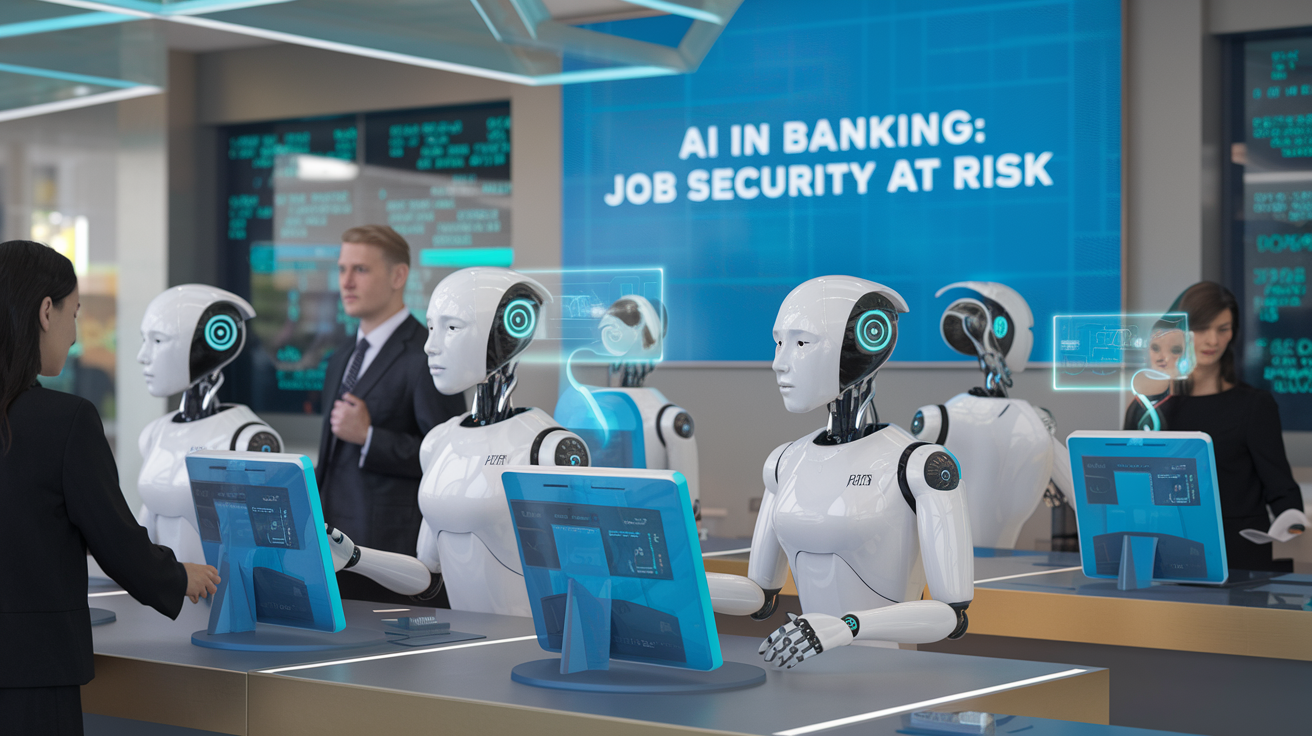
📊 Is your job on the chopping block? As AI storms the gates of the banking industry, you might be wondering if your career is next in line. Citigroup's recent move to deploy generative AI across its operations isn't just a headline—it's a wake-up call for professionals in every sector.
🤖 You've heard the whispers: AI is coming for our jobs. But here's the twist—while it's true that 85 million jobs could vanish by 2025, a staggering 97 million new roles are set to emerge. The question isn't whether AI will change your industry; it's whether you'll be ready when it does. From analyzing complex regulations to providing personalized investment advice, AI is reshaping the workforce faster than you might think.
So, what's your move? Will you be caught off guard, or will you ride the wave of innovation? In this post, we'll dive into the AI revolution sweeping through banks and beyond. You'll discover how to future-proof your career, adapt to the AI-driven job market, and ensure your financial preparedness in this new age. Don't let AI catch you unprepared—let's explore how you can stay ahead of the curve and secure your place in the workforce of tomorrow.
The Rise of AI in Banking: Citigroup's Case Study

A. Integration of generative AI for developers
You might be wondering how AI is revolutionizing the banking industry, and Citigroup's recent moves provide a perfect example. In their Q4 2024 earnings call, CEO Jane Fraser announced an impressive deployment of generative AI coding tools to 30,000 developers. This strategic move is part of Citigroup's broader modernization efforts, demonstrating how AI is becoming an integral part of banking operations.
Citigroup's commitment to AI integration is reflected in their substantial technology expenditure:
| Area of Investment | Amount (in billions) |
|---|---|
| Overall tech spending | $11.8 |
| Transformation initiatives | $2.9 |
These investments are aimed at enhancing various aspects of banking, including:
-
Digital innovation
-
Product development
-
Client experience
-
Cybersecurity
-
Infrastructure
-
Data management
You'll be interested to know that Citigroup's modernization efforts have already yielded significant results. Over the past three years, they've retired 2,000 legacy applications, streamlining their technological infrastructure.
B. AI applications in risk management and compliance
As you navigate the changing landscape of banking, you'll notice that AI is playing a crucial role in risk management and compliance. Citigroup has taken substantial steps in this direction:
-
Consolidation of risk management platforms
-
Launch of new AI-assisted tools
-
Collaboration with Google Cloud for AI and analytics support
These initiatives are particularly important given Citigroup's history of regulatory scrutiny. Following a 2020 Federal Reserve enforcement action and subsequent penalties for poor data management, the bank has intensified its focus on improving data governance and regulatory reporting.
C. Personalized investment advice and enhanced cybersecurity
You'll be pleased to know that AI is not just transforming backend operations but also enhancing your banking experience. Citigroup is leveraging AI to provide:
-
Personalized investment advice
-
Improved cybersecurity measures
The bank's digital transformation strategy revolves around three key areas:
-
Assisting employees
-
Optimizing business processes
-
Detecting fraud
You'll find these improvements reflected in Citigroup's digital offerings:
-
Active mobile users: 19 million
-
Digital users for Cards and Retail: Over 25 million
To enhance your digital experience, Citigroup has introduced several innovative features:
-
Offer Management System: Automates offer setup and provides transparency in marketing campaigns
-
Citi Pay: A digital payment product
-
Citi Shop: A browser extension for finding online offers
-
WayFinder: A feature in the Citi Mobile App to help you navigate services efficiently
As you can see, AI is reshaping the banking industry, with Citigroup leading the charge. From streamlining operations to enhancing customer experiences, the impact of AI is far-reaching. With this in mind, next, we'll explore how these technological advancements are affecting job displacement and creation in the AI era, giving you a clearer picture of the evolving job market in banking and beyond.
Job Displacement and Creation in the AI Era

Now that we've explored Citigroup's case study on AI integration in banking, let's examine the broader implications for job displacement and creation in the AI era.
A. High-risk jobs facing automation
As AI continues to transform the financial services sector, certain roles are at higher risk of automation. You should be aware that:
-
Back-office functions and customer service positions are particularly vulnerable to AI-driven automation.
-
Repetitive tasks, such as data entry and basic transaction processing, are prime candidates for AI replacement.
-
Roles that primarily involve data analysis and pattern recognition may be significantly impacted by machine learning algorithms.
B. Emerging roles in AI development and management
While some jobs face displacement, new opportunities are emerging in the AI landscape. You can prepare for these roles:
-
Data Science Specialists: Banks need experts to develop and maintain AI systems.
-
AI Ethics Officers: Ensuring responsible AI use and addressing bias concerns.
-
AI-Human Interaction Managers: Overseeing the integration of AI with human workflows.
-
Regulatory AI Compliance Experts: Navigating the complex intersection of AI and financial regulations.
C. Net job growth predictions by 2025
Despite concerns about job losses, the AI revolution is expected to create more jobs than it eliminates. Consider these projections:
| Sector | Job Loss | Job Creation | Net Growth |
|---|---|---|---|
| Banking | -200,000 | +300,000 | +100,000 |
| Finance | -150,000 | +250,000 | +100,000 |
| Tech | -50,000 | +400,000 | +350,000 |
You should note that while these numbers are speculative, they reflect the general trend of job market transformation due to AI.
To future-proof your career in this evolving landscape, you can:
-
Stay updated on AI developments in banking
-
Engage in continuous learning and skill development
-
Participate in industry discussions and networking events
-
Develop skills that complement AI, such as creativity and emotional intelligence
-
Consider reskilling or upskilling in AI-related fields
Remember, roles demanding creativity and emotional intelligence are less prone to automation. You can focus on developing these skills to enhance your job security.
As banks invest heavily in AI technologies, you'll find that the demand for professionals who can work effectively with these systems is increasing. By adapting to this change and acquiring relevant skills, you can position yourself for success in the AI-driven job market.
It's crucial to understand that while AI may displace certain jobs, it also creates new opportunities. You should view this transformation as a chance to evolve your career and contribute to the cutting-edge developments in the banking sector.
With this understanding of job displacement and creation in the AI era, we'll next explore AI's impact across various industries, broadening our perspective on how this technology is reshaping the global workforce.
AI's Impact Across Industries

Now that we've explored job displacement and creation in the AI era, let's examine how AI's impact extends across various industries, particularly focusing on automation in customer service and manufacturing.
A. Automation in customer service and manufacturing
You've likely encountered AI-powered customer service in your daily life, especially in the banking sector. The rise of chatbots and virtual assistants has revolutionized how you interact with financial institutions. For instance, Bank of America's AI chatbot, Erica, has engaged in over 1.5 billion interactions since its launch in 2018. This shift towards AI-driven customer support means you can now access round-the-clock assistance, significantly improving service efficiency.
In manufacturing, AI is streamlining processes and enhancing productivity. You'll find that AI algorithms are being used to optimize production lines, predict maintenance needs, and improve quality control. This automation is reshaping how you perceive traditional manufacturing roles and the skills required in the industry.
B. Job categories at risk of replacement
As AI continues to advance, certain job categories face a higher risk of replacement. You should be aware of these roles to better prepare for the changing job market:
-
Data entry and processing
-
Customer service representatives
-
Bank tellers and loan officers
-
Assembly line workers
-
Bookkeepers and accounting clerks
| Job Category | Risk Level | AI Impact |
|---|---|---|
| Data Entry | High | Automated data processing |
| Customer Service | Medium to High | AI chatbots and virtual assistants |
| Bank Tellers | High | Digital banking and AI-powered transactions |
| Assembly Line Workers | High | Robotic process automation |
| Bookkeepers | Medium | AI-powered accounting software |
C. Roles less vulnerable to AI takeover
While some jobs are at risk, others are less likely to be fully replaced by AI. You'll find that these roles often require complex decision-making, emotional intelligence, and creativity:
-
Healthcare professionals (doctors, nurses)
-
Creative professionals (artists, designers)
-
Teachers and educators
-
Social workers and counselors
-
Senior management and strategic planners
These roles involve tasks that AI currently struggles to replicate, such as empathy, complex problem-solving, and nuanced human interaction. However, you should note that even these professions may see AI integration to enhance efficiency and decision-making processes.
As you consider the impact of AI across industries, it's crucial to recognize that while some jobs may be at risk, new opportunities are also emerging. The key lies in understanding how your skills can adapt to this evolving landscape. With this in mind, next, we'll explore strategies for adapting to the AI-driven job market, helping you navigate these changes and future-proof your career.
Adapting to the AI-Driven Job Market
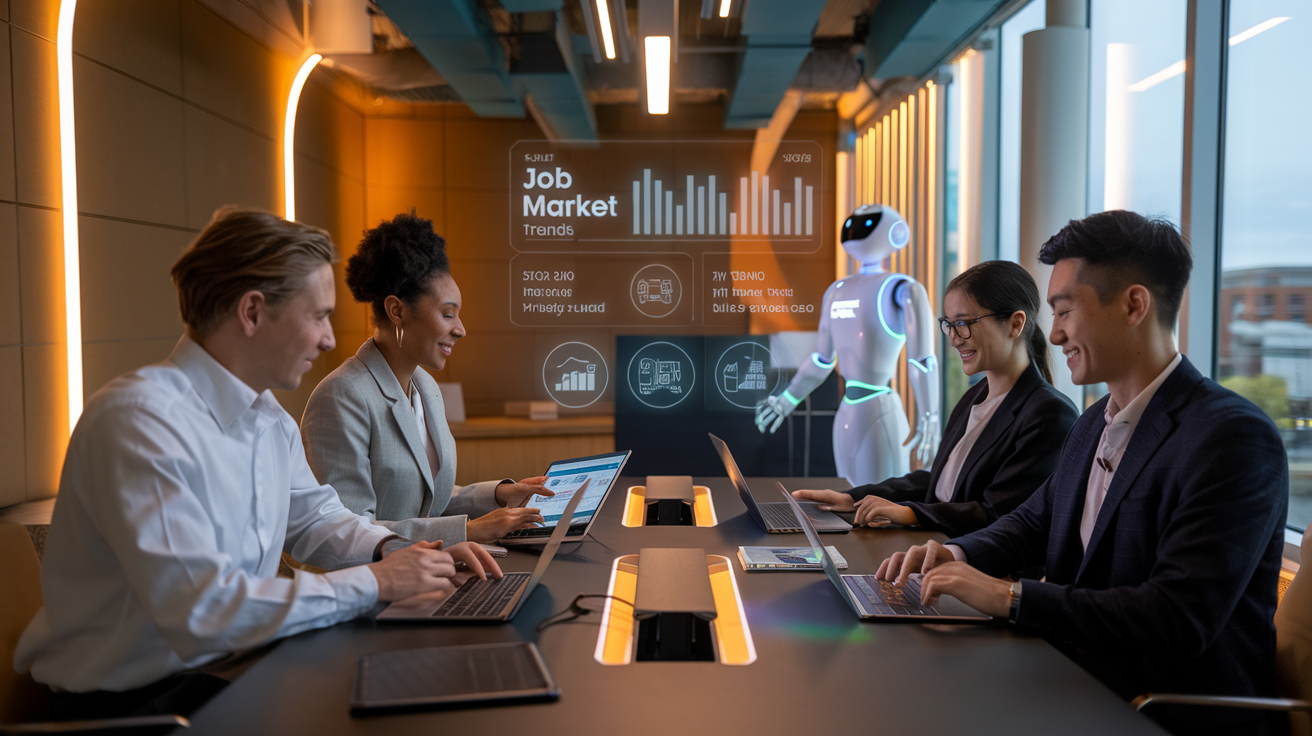
Now that we've explored AI's impact across various industries, it's crucial to understand how you can adapt to the AI-driven job market, especially in the banking sector. As AI continues to reshape the financial landscape, your ability to evolve alongside these technological advancements will be key to maintaining a competitive edge in your career.
Importance of upskilling in AI-related fields
In the rapidly changing world of banking, staying relevant means embracing AI-related skills. With 86% of financial services executives acknowledging AI's crucial importance for future success, your focus on upskilling in this area is more critical than ever. Here are some key AI-related fields you should consider:
-
Data literacy and AI fundamentals
-
Machine learning and predictive analytics
-
Natural Language Processing (NLP)
-
AI-driven cybersecurity
By developing these skills, you'll be better equipped to:
-
Critically assess AI-generated insights
-
Collaborate effectively with data scientists
-
Utilize predictive analytics for improved risk assessment
-
Enhance customer engagement through AI-powered systems
Developing emotional intelligence and soft skills
While AI excels at processing vast amounts of data and automating tasks, your human touch remains irreplaceable. To complement AI's capabilities, focus on developing these essential soft skills:
-
Empathy and customer understanding
-
Creative problem-solving
-
Effective communication
-
Adaptability and resilience
These skills will allow you to:
-
Provide personalized customer experiences that AI can't replicate
-
Navigate complex situations that require human judgment
-
Bridge the gap between AI systems and human needs
-
Thrive in an ever-changing work environment
Embracing lifelong learning and adaptability
The banking industry is projected to see AI influence over $450 billion in revenue by 2025. To stay ahead of this curve, you must commit to continuous learning and adaptability. Here's how you can cultivate a growth mindset:
-
Stay informed about AI advancements in banking
-
Participate in AI-focused training programs and workshops
-
Seek opportunities to work on AI-related projects
-
Network with professionals in AI and banking
| Benefits of Lifelong Learning | Impact on Your Career |
|---|---|
| Enhanced job security | Remain valuable in an AI-driven workplace |
| Increased innovation potential | Contribute to cutting-edge banking solutions |
| Better decision-making skills | Leverage AI insights for strategic choices |
| Improved customer service | Blend AI efficiency with human empathy |
By embracing lifelong learning, you'll position yourself as an adaptable professional capable of leveraging AI to enhance your skills rather than replace them. Remember, banks like JP Morgan Chase have already seen substantial efficiency gains through AI tools, saving 360,000 legal hours annually. Your ability to work alongside these AI systems will be crucial for your career growth.
As we transition to the next section on "The Evolution of AI and Its Labor Market Effects," it's important to recognize that your journey of adaptation doesn't end here. The AI landscape in banking is continuously evolving, and so should your skills and knowledge. By staying proactive in your learning and development, you'll be well-prepared to navigate the changing labor market and capitalize on new opportunities that arise from AI advancements in the financial sector.
The Evolution of AI and Its Labor Market Effects
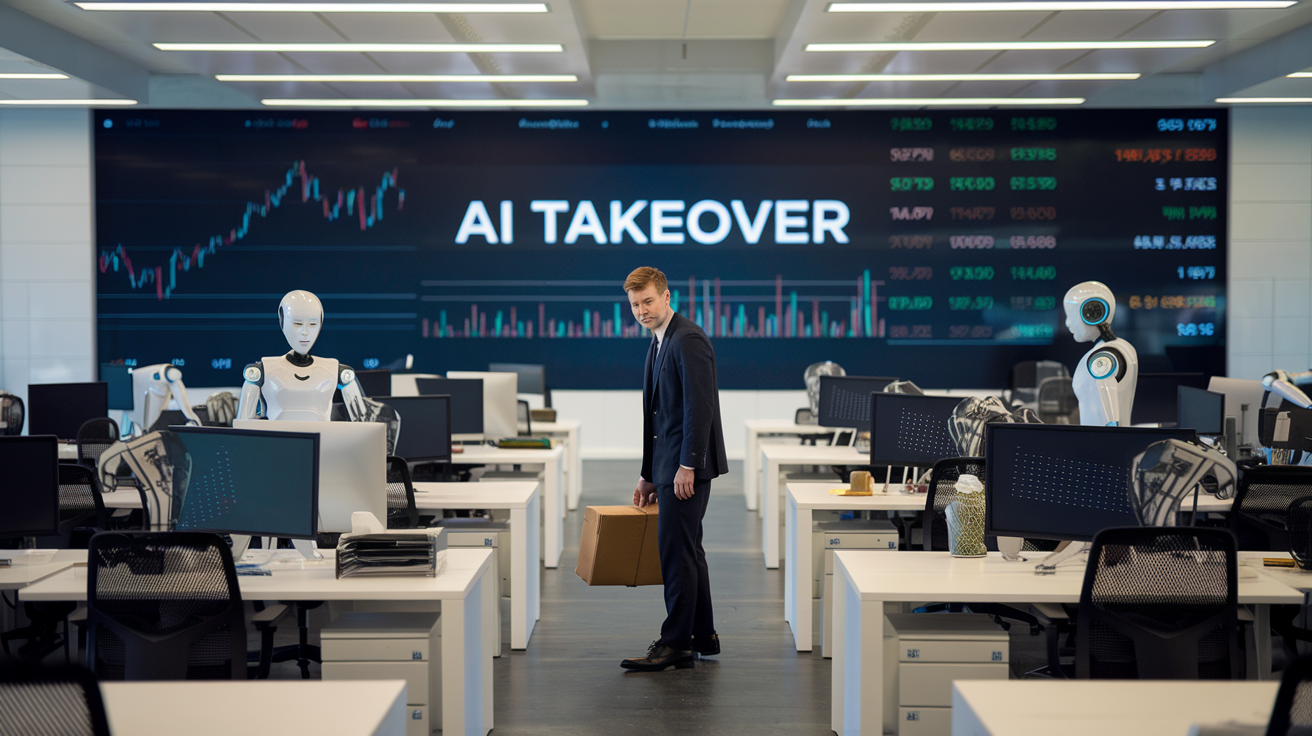
Now that we've explored how to adapt to the AI-driven job market, let's delve into the evolution of AI and its profound effects on the labor market. Understanding this progression will help you better prepare for the challenges and opportunities ahead.
Key milestones in AI development
AI's journey in the financial sector has been marked by significant milestones:
-
1950s: The term "artificial intelligence" was coined at the Dartmouth Summer Research Project.
-
1960s: Emphasis on Bayesian statistics in auditing for more objective decision-making.
-
1970s: The "AI winter" - a period of reduced funding and interest.
-
1980s: Resurgence with expert systems to mitigate human errors in financial institutions.
-
1990s-2000s: Expansion into fraud detection, risk management, and quantitative trading.
-
Recent years: Rise of Natural Language Processing (NLP) for analyzing vast amounts of textual data.
Shifts in job dynamics through industrial revolutions
You've likely heard about industrial revolutions, but how have they affected job dynamics? Let's compare:
| Industrial Revolution | Key Technology | Job Impact |
|---|---|---|
| First (18th-19th century) | Steam power | Shift from agriculture to manufacturing |
| Second (Late 19th-20th century) | Electricity, mass production | Rise of factory jobs, specialization |
| Third (Late 20th century) | Computers, automation | Decline in manufacturing, growth in service sector |
| Fourth (Current) | AI, IoT, big data | Automation of cognitive tasks, new tech-based roles |
The fourth industrial revolution and its unique challenges
As you navigate the fourth industrial revolution, you'll face unique challenges:
-
Rapid technological change: Unlike previous revolutions, AI's development is exponential, requiring continuous adaptation.
-
Cognitive automation: AI is now capable of performing tasks that were once thought to be uniquely human, such as analysis and decision-making.
-
Data-driven economy: Your ability to work with and interpret large datasets will become increasingly valuable.
-
Ethical considerations: You'll need to grapple with issues like AI bias and the "black box" problem in decision-making processes.
-
Regulatory lag: As AI adoption outpaces regulation, you may encounter uncertainty in compliance and governance.
In the banking sector, you're witnessing a transformation driven by AI. From enhancing customer experiences through personalized services to improving fraud detection and risk management, AI is reshaping the industry. As a professional in this field, you'll need to stay updated on these developments and understand their implications for your role.
The integration of AI in banking is not just about job displacement; it's also creating new opportunities. You might find yourself working alongside AI systems, focusing on tasks that require creativity, emotional intelligence, and complex problem-solving skills that AI currently struggles with.
Looking ahead, the future of AI in banking promises even more advanced applications in predictive analytics, automation, and customer interaction. As you prepare for this evolving landscape, it's crucial to consider strategies for future-proofing your career. In the next section, we'll explore specific approaches you can take to enhance your skills and remain competitive in an AI-driven job market.
Strategies for Future-Proofing Your Career

Now that we've explored the evolution of AI and its effects on the labor market, let's focus on how you can future-proof your career in this rapidly changing landscape.
Building networks in AI-friendly industries
You've seen how AI is transforming various sectors, particularly finance. To stay ahead, it's crucial to expand your professional network in AI-friendly industries. Here's how you can do it:
-
Attend industry conferences and symposiums focused on AI in finance
-
Join online communities and forums discussing AI applications in banking
-
Connect with professionals working on AI projects in financial institutions
-
Participate in webinars and workshops on AI integration in finance
By building these connections, you'll gain valuable insights into emerging trends and potential career opportunities in AI-augmented roles.
Focusing on creativity and strategic thinking
While AI excels at automating routine tasks, it struggles with creative and strategic aspects of work. To complement AI capabilities, focus on developing these skills:
-
Critical thinking
-
Emotional intelligence
-
Complex problem-solving
-
Strategic financial planning
-
Ethical decision-making
| Human Skills | AI Capabilities |
|---|---|
| Nuanced judgment | Data analysis |
| Market sentiment interpretation | Algorithmic trading |
| Regulatory landscape navigation | Fraud detection |
| Strategic decision-making | Process automation |
By honing these uniquely human skills, you'll position yourself as an invaluable asset in roles that require sophisticated reasoning and contextual understanding.
Developing skills that complement AI capabilities
To thrive in an AI-driven job market, you need to cultivate a hybrid skill set that combines technical knowledge with domain expertise. Consider the following strategies:
-
Pursue relevant degrees or certifications in AI and finance
-
Gain practical experience through internships or projects involving AI applications
-
Develop data analysis and financial modeling skills with AI tools
-
Stay updated on AI trends and their implications for finance
Remember, roles like AI auditors, investment analysts, and technology consultants are emerging, requiring a blend of finance knowledge and technical skills. By focusing on these areas, you'll be well-prepared for the future of finance:
-
Data science and analysis
-
AI ethics and governance
-
Cybersecurity in finance
-
Regulatory compliance in AI-driven systems
-
Risk management in automated processes
As you adapt to this evolving landscape, maintain a mindset of continuous learning and improvement. Embrace AI tools as assistants rather than competitors, and focus on developing skills that allow you to interpret AI-generated insights and apply them strategically.
With these strategies in place, you'll be well-equipped to navigate the changing job market and leverage AI effectively in your career. Next, we'll explore how you can ensure financial preparedness in the age of AI, building on the career-focused strategies we've discussed.
Financial Preparedness in the Age of AI

Now that we've covered strategies for future-proofing your career in the age of AI, it's crucial to consider your financial preparedness. As the job market evolves with the integration of artificial intelligence, ensuring your financial stability becomes more important than ever. Let's explore how you can secure your financial future in this rapidly changing landscape.
Building a rainy-day fund
In an era where AI is transforming industries and job roles, having a robust emergency fund is essential. You should aim to build a rainy-day fund that can cover at least 3-6 months of your living expenses. This financial cushion will provide you with peace of mind and flexibility as you navigate potential job market disruptions.
To start building your emergency fund:
-
Assess your monthly expenses
-
Set a realistic savings goal
-
Automate your savings contributions
-
Cut unnecessary expenses to boost your savings rate
-
Consider high-yield savings accounts for better returns
Remember, consistency is key when building your rainy-day fund. Even small, regular contributions can accumulate over time, providing you with a valuable safety net.
Investing wisely for long-term security
While AI may change the job market, smart investing remains a cornerstone of financial preparedness. As you adapt to the AI-driven economy, it's crucial to diversify your investment portfolio to mitigate risks and maximize potential returns.
Consider the following investment strategies:
| Investment Type | Potential Benefits | Considerations |
|---|---|---|
| Index Funds | Low-cost, broad market exposure | Limited control over individual holdings |
| AI-focused ETFs | Exposure to AI industry growth | Higher volatility and sector-specific risks |
| Real Estate | Potential passive income and appreciation | Requires significant capital and management |
| Bonds | Stable income and lower risk | Generally lower returns compared to stocks |
Remember to align your investment strategy with your risk tolerance and financial goals. As the AI landscape evolves, stay informed about emerging investment opportunities in technology and AI-related sectors.
Exploring alternative income sources
In the age of AI, diversifying your income streams can provide additional financial security. By developing multiple sources of income, you'll be better positioned to weather potential job market changes and take advantage of new opportunities.
Consider these alternative income sources:
-
Freelancing or consulting in your area of expertise
-
Creating and monetizing online content (e.g., blogs, videos, podcasts)
-
Developing passive income streams through digital products or online courses
-
Participating in the gig economy through platforms like Uber or TaskRabbit
-
Investing in dividend-paying stocks or real estate investment trusts (REITs)
As you explore these options, focus on leveraging your existing skills and knowledge. You can also consider upskilling in areas like data analysis or AI programming to create new income opportunities in the evolving job market.
By building a rainy-day fund, investing wisely, and exploring alternative income sources, you'll be better prepared to face the financial challenges and opportunities presented by the AI revolution. Remember, financial preparedness is an ongoing process, so regularly review and adjust your strategies as the AI landscape continues to evolve. Stay informed about industry developments and be proactive in managing your finances to ensure long-term security in this dynamic era.
Conclusion

As AI continues to reshape the banking sector and beyond, it's clear that your career landscape is evolving rapidly. While jobs in data entry, customer service, and routine tasks face potential displacement, new opportunities are emerging in AI development, data science, and roles requiring human creativity and emotional intelligence. To future-proof your career, focus on continuous learning, developing skills that complement AI capabilities, and staying informed about technological advancements in your industry.
Remember, adapting to the AI-driven job market isn't just about professional development—it's also about financial preparedness. Build a robust emergency fund, diversify your investments, and consider alternative income streams to safeguard your financial future. By embracing change, upskilling proactively, and maintaining financial resilience, you can position yourself to thrive in the age of AI. The future of work is here, and it's up to you to seize the opportunities it presents.
Comments
Post a Comment